"...the owner(s) of the site must execute a maintenance agreement that shall be binding on all subsequent owners of land served by the stormwater BMP."
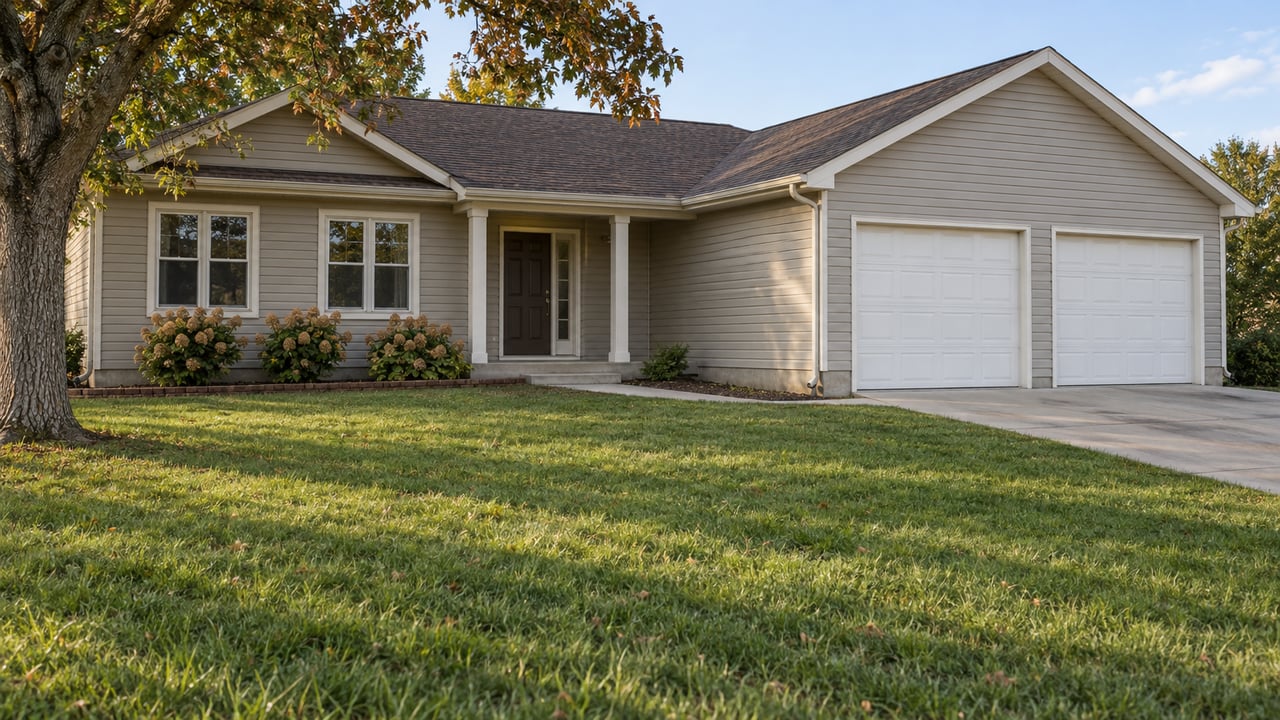
That sentence comes from Section 5-205 of the Kirkwood City Code. If you're touring a newer home in Kirkwood, especially one that replaced a smaller house, it may apply to you more than anything on the listing sheet.
"BMP" means best management practice. In practice it's the dry well, rain garden or vegetated filter strip a builder put in to handle runoff from the new roof and driveway. Since Kirkwood adopted its infill stormwater ordinance, Ord. No. 10546, on January 3, 2019, projects that need one have been required to sign a maintenance agreement and record it with the St. Louis County Recorder of Deeds before the City issues a permit. The agreement stays with the land. When the house sells, the obligation transfers to the buyer along with the keys.
What a buyer takes on
The code spells out three things. The City or its designee gets access to the BMP "at reasonable times for periodic inspection." The owner has to keep the BMP "in an effective state as determined in the sole judgment of the City." And if the Director of Public Services or an inspector finds the agreement has been violated, the City can order compliance under its Property Maintenance Code, with that code's penalties.
"Sole judgment of the City" means the standard is the City's call, not the owner's opinion about whether a rain garden is doing its job.
The City's Engineering page, last updated September 17, 2026, lays out the full timeline for a BMP project. From a buyer's side, these are the steps that matter:
- Signing. The property owner signs the BMP documents in front of a notary public and the Assistant City Engineer.
- Recording. The executed BMP Maintenance Agreement is recorded with St. Louis County, and the City won't release the permit for construction until it verifies the recording receipt.
- Final BMP inspection. The system has to pass before the project moves into its post-construction phase. Occupancy permits can't be granted until every stormwater BMP has been inspected and approved.
- One-year post-construction inspection. This checks that the BMP works and has been maintained.
- Maintenance inspections every three years after that, under the terms of the recorded agreement.
Compare a home finished in late 2024 with one finished last spring. The first may already be into its three-year cycle. The second may still be waiting for its one-year visit, and if you buy it, you're the owner at that inspection. Neither situation is a problem. Both are worth knowing about before you're under contract.
There's also money involved on brand-new builds. If a BMP is built as part of permitted work that doesn't carry a residential site restoration escrow or performance guarantee, the code requires a stormwater BMP construction escrow. Kirkwood's fee schedule sets it at $1,000, "100% refundable upon final inspection and acceptance" by Public Services. If a home sells before that final acceptance, the purchase contract should say who gets the refund.
Why Kirkwood wrote these rules, and why it tightened them
These agreements exist because of runoff complaints. In May 2024, First Alert 4 reported on a Kirkwood lot where a 4,248-square-foot home replaced one under 1,500 square feet. Neighbors said water started running in new directions, into yards, a garage and a driveway. MSD told the station that larger homes replacing smaller ones can push runoff past what existing systems handle. The City said the construction was permitted and mitigation wasn't yet complete.
Councilmember Deb Lavender put it directly in her September 16, 2026 newsletter: "For more than a decade, residents have complained about flooding on their property after a new home (or 2 or 3) have gone up around their home." The Webster-Kirkwood Times reported residents describing basement water, pooled yards, icy sidewalks and runoff from new construction.
So the City revised both the ordinance and its Stormwater Manual. Assistant City Engineer Jennifer Brown sent a proposal to the Mayor and Council on June 15, 2026. A town hall followed on June 30, and the Council worked through the details in sessions on August 13, September 3 and September 10. At the August session, staff reported that 72% of written comments came from Kirkwood residents or homeowners rather than builders. A majority of commenters agreed stormwater needed to be addressed. Builders mostly preferred enforcement through MSD or citywide measures over lot-by-lot rules.
What passed on October 1, and when it starts
The ordinance and the manual needed two separate votes. Both votes happened at the October 1, 2026 Council meeting. The amended ordinance, Bill 11148AA, passed final reading on a roll call. Resolution 98-2026, which adopts the updated stormwater management guidance manual, passed as amended, with Council member Arnold voting no.
Passage isn't the same as taking effect. The Council amended the ordinance so it is "in full force and effective on April 1, 2027." Councilman Paul Schaefer, who made the motion, said the six-month window matched what the Home Builders Association had asked for. The manual's effective date was moved from January 1 to April 1, 2027 to match. During the discussion, it was clarified that applicants only need to apply for a permit by that date. Construction doesn't have to be finished by then. Lavender objected that this gives a six-month "running head start," and someone at the meeting said the City may already have seen more applications ahead of the vote.
This is the part that changes what an expansion plan will cost. I haven't seen the final adopted text, so read the right-hand column below as where the language stood in the work sessions, not as the enacted numbers.
| Item | Current code | June 15 staff proposal | Status in work-session language |
|---|---|---|---|
| New impervious area that triggers mitigation | 1,000 sq ft | 500 sq ft | Council consensus Aug. 13: 750 sq ft |
| Rainfall to capture | First 1.14 inches | 1.14 inches | Council consensus Aug. 13: 1.25 inches, matching MSD |
| Max impervious coverage, single-family lot | No cap in proposal summary | 55% | 55% still in Sept. 3 language |
| Treatment above 25% lot coverage | None | Required | Council asked staff to review and adjust, Sept. 3 |
| Grading permit for flatwork | Over 750 sq ft | Over 100 sq ft | Council asked for a number between 100 and 750, Sept. 10 |
| Tree credit per qualifying tree | 50 sq ft | 150 sq ft | 150 sq ft still in proposed Sept. 10 language |
MSD is changing its rules on a similar schedule. MSD's notice says development plans submitted before January 1, 2027 fall under its 2018 rules, and plans submitted on or after that date fall under the 2027 rules. Schaefer had earlier suggested aligning Kirkwood's rules with MSD's.
Which buyer plans are most affected
If you're buying a Kirkwood house to live in as-is, very little of this touches you. The City's own summary says routine maintenance, like replacing a driveway or sidewalk in its existing footprint, isn't affected. It also notes that most lots are well under the 55% cap.
Plans to expand after closing are another story, and April 1, 2027 is the date to plan around. A 600-square-foot addition applied for before then is measured against today's 1,000-square-foot trigger. After that date, it's measured against whatever trigger the adopted text sets, and the work sessions had it at 750 square feet. A new patio that needs no permit today could need a grading permit, depending on where the threshold ends up. Any BMP that a project triggers brings its own recorded agreement, so the buyer who does the work becomes the first owner on that agreement.
Four details are worth knowing early:
- Basements. Brown's June memo from the City of Kirkwood would bar new or expanded basements from going below the existing basement elevation unless a geotechnical report or the City's Depth to Water Table Map supports it. Most comments at the August session were about basement depth. The Times reported that builders argued it limits redevelopment flexibility and construction feasibility. I haven't seen how the basement rule reads in the version that passed. If you're planning a teardown with a deep lower level, confirm the adopted text before you budget.
- Sump pumps. The City of Kirkwood's September 10 language would require sump pump dry wells to connect to the public storm system when there's an MSD inlet on the property or in the right-of-way in front of it. It also adds that discharge can't create a nuisance for neighbors, sidewalks or roadways.
- Mature trees. Under the September 10 language, each tree with an adjusted diameter of 8 inches or more could offset 150 square feet of impervious area. That would come with no impervious surface or construction inside a 10-foot radius. Credited trees would be listed on the recorded agreement and inspected along with the BMPs. If one dies or is removed, the owner could owe two replacement trees of at least 2-inch caliper, or another form of mitigation. A big oak can lower your mitigation burden, and it also becomes a tree you've committed to keeping.
- Pavers. Per the September 10 discussion, permeable pavers count as a BMP only on a driveway. Used as a patio, lot-coverage rules still apply.
Some options are cheaper. Brown told the Council that for smaller projects and residents doing the work themselves, "I guide them toward the cheaper options," including dry wells and rain gardens, and she mentioned Missouri Botanical Garden grants for rain gardens. MSD's Rainscaping Small Grants program has allowed residential requests of up to $4,000 since October 1, 2025. That's a cap on the grant, not a typical project cost, and I haven't found reliable installed-cost figures for Kirkwood.
What I'd put in the file before closing
On any Kirkwood home built or expanded since 2019, this is what I'd want my buyers to have in hand:
- A copy of the recorded BMP Maintenance Agreement from the St. Louis County Recorder of Deeds, or confirmation that there isn't one.
- The date the BMP passed final inspection, and whether the one-year inspection has happened yet.
- The status of the $1,000 BMP construction escrow if the home is newly finished, and a line in the contract saying who receives the refund.
- A note on where the BMP is and which trees, if any, are tied to it, so a future landscaping project doesn't remove something that's on record.
- If you're planning an addition, patio or basement work, a decision on whether to apply for the permit before April 1, 2027, made after reading the adopted ordinance and manual once the City posts them on its stormwater ordinance page.
For a straightforward sale, none of this should hold up a closing. It's paperwork. It's also paperwork the City will come back to on a fixed schedule, so it's worth having it organized before you own the house.
If you're weighing a newer Kirkwood home or a house you plan to expand, Holly Crump can help you pull the recorded agreement, line up the inspection dates and figure out whether your project should be permitted before the April 1, 2027 cutoff. Work With Holly.
This article is general information, not legal, tax or financial advice. Consult a qualified professional about your situation.